
Product Introduction
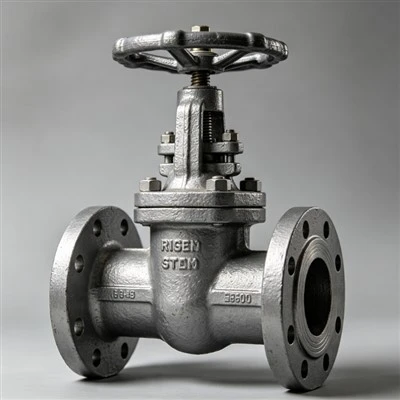
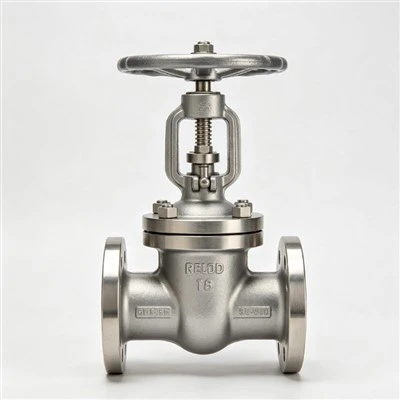
The Rising Stem Stainless Steel Gate Valve delivers zero-leakage isolation in demanding industrial piping systems. Manufactured to API 600 and ASME B16.34 standards using certified CF8, CF8M, or duplex alloys, it features an unobstructed full-bore flow path that minimizes pressure drop. The external rising stem provides immediate visual position verification while keeping operating threads out of process fluids. Every valve is hydrostatically tested before shipment to guarantee full specification compliance.
Key Features of Rising Stem Stainless Steel Gate Valve
Visual Position Indication
The external stem moves linearly during operation, offering instant line-of-sight status verification while isolating stem threads from process fluid.
Corrosion-Resistant Alloy Construction
Cast and forged alloys including CF8, CF8M, CF3M, and duplex steels are selected based on media chemistry to prevent pitting, crevice attack, and erosion.
Bi-Directional Tight Shut-Off
Precision-machined wedge gates and body seats deliver dependable bi-directional sealing designed strictly for full-open or full-closed isolation service.
Unobstructed Full-Bore Flow
When fully raised, the wedge clears the flow channel entirely, reducing fluid turbulence, minimizing head loss, and permitting line pigging.
Universal End Configurations
End connections are machined to standard global piping dimensions, including ASME B16.5, EN 1092-1, and ASME B16.25, ensuring precise alignment.
Engineered Specification Matching
Wall thickness, packing material, and bonnet bolting are systematically adapted to match specific client datasheets, temperatures, and pressure ratings.
Working Principle
Operating the handwheel or actuator moves the stem linearly, raising the wedge gate completely out of the flow channel for unobstructed full-bore flow. Rotating clockwise lowers the wedge into the body seats, utilizing mechanical wedge angle force to form a tight seal against pressure from either direction. The exposed stem position provides instant visual indication of open or closed status.
Technical Specifications
|
Parameter |
Core Specifications |
|
Design Standards |
API 600, ASME B16.34, EN 1984 |
|
Nominal Diameters |
DN15 to DN1200 (1/2 Inch to 48 Inches) |
|
Pressure Ratings |
Class 150 to Class 1500 / PN10 to PN100 |
|
Materials |
ASTM A351 CF8, CF8M, CF3, CF3M, Duplex 2205 / 2507 |
|
Testing Standards |
API 598, EN 12266-1 |
End Connection Options
Selecting the correct connection guarantees structural integrity and leak-free joint performance within the piping layout.
Flanged Ends: Flanged per ASME B16.5 or EN 1092-1 for easy installation and maintenance.
Butt-Weld Ends: Butt-welded per ASME B16.25 for permanent, high-pressure leak-proof joints.
Threaded and Socket-Weld Ends: NPT or socket-welded for compact, small-bore utility lines.
Operation Options
Operation methods are selected according to valve size, line pressure, and automation requirements.
Handwheel Operation
Manual handwheel for simple, periodic on/off isolation.
Gear Operation
Enclosed gearbox for low rim effort on large or high-pressure valves.
Actuated Operation
ISO 5211 mounting pad for electric, pneumatic, or hydraulic actuators.
Applications of Rising Stem Stainless Steel Gate Valve
Chemical and Petrochemical Refining
Provides reliable isolation for raw process lines, organic solvents, corrosive acids, and chemical derivatives.
Water and Wastewater Treatment
Delivers long-term shut-off in reverse osmosis systems, industrial effluent lines, and high-capacity desalination facilities.
Food and Pharmaceutical Processing
Utilizes polished high-grade stainless steel to meet strict process cleanliness and purity standards.
Marine and Offshore Engineering
Resists marine atmospheric corrosion in ballast control, seawater cooling loops, and offshore production networks.
Energy and Power Generation
Handles auxiliary steam lines, condensate return systems, and high-temperature boiler feed water isolation.
General Industrial Utilities
Functions as a primary isolation valve across compressed air headers, cooling water loops, and plant utility piping.
Why Choose Us
Castings and forgings undergo chemical analysis and mechanical testing with full EN 10204 3.1 Material Test Reports.
Every valve undergoes hydrostatic shell and seat testing per API 598 or EN 12266-1 prior to dispatch.
Dimensions, packing sets, face-to-face lengths, and actuation flanges can be modified against project datasheets.
Combining gate valves with matching strainers, check valves, and fittings simplifies single-source project procurement.
FAQ
Q: What is a rising stem stainless steel gate valve?
A: It is a linear-motion valve whose stem moves up to open and down to close. Built from corrosion-resistant alloys, it provides visible position indication and is used for on/off line isolation.
Q: What is the main advantage of a rising stem design?
A: It allows instant visual verification of valve position from a distance while keeping stem threads outside the fluid stream to prevent corrosion and simplify lubrication.
Q: Is a stainless steel gate valve suitable for all corrosive media?
A: No. Alloy suitability depends on fluid concentration, temperature, and pressure, so materials like CF8, CF8M, or duplex must be matched to specific chemical compatibility guides.
Q: What standards are followed for pressure ratings and end connections?
A: Valves follow ASME (Class 150 to 1500) or EN (PN10 to PN100) standards, with flanged (RF/FF/RTJ), butt-weld, socket-weld, or NPT threaded end connections.
Q: What technical details are required to receive an accurate quotation?
A: Provide nominal size, pressure class, body/trim materials, end connections, process medium, working temperature/pressure, actuation type, and required certifications.
Q: What quality documentation is provided with the shipment?
A: Standard packages include EN 10204 3.1 Material Test Certificates, API 598/EN 12266-1 pressure test reports, Certificates of Conformance, and O&M manuals.
Hot Tags: rising stem stainless steel gate valve, China rising stem stainless steel gate valve suppliers